

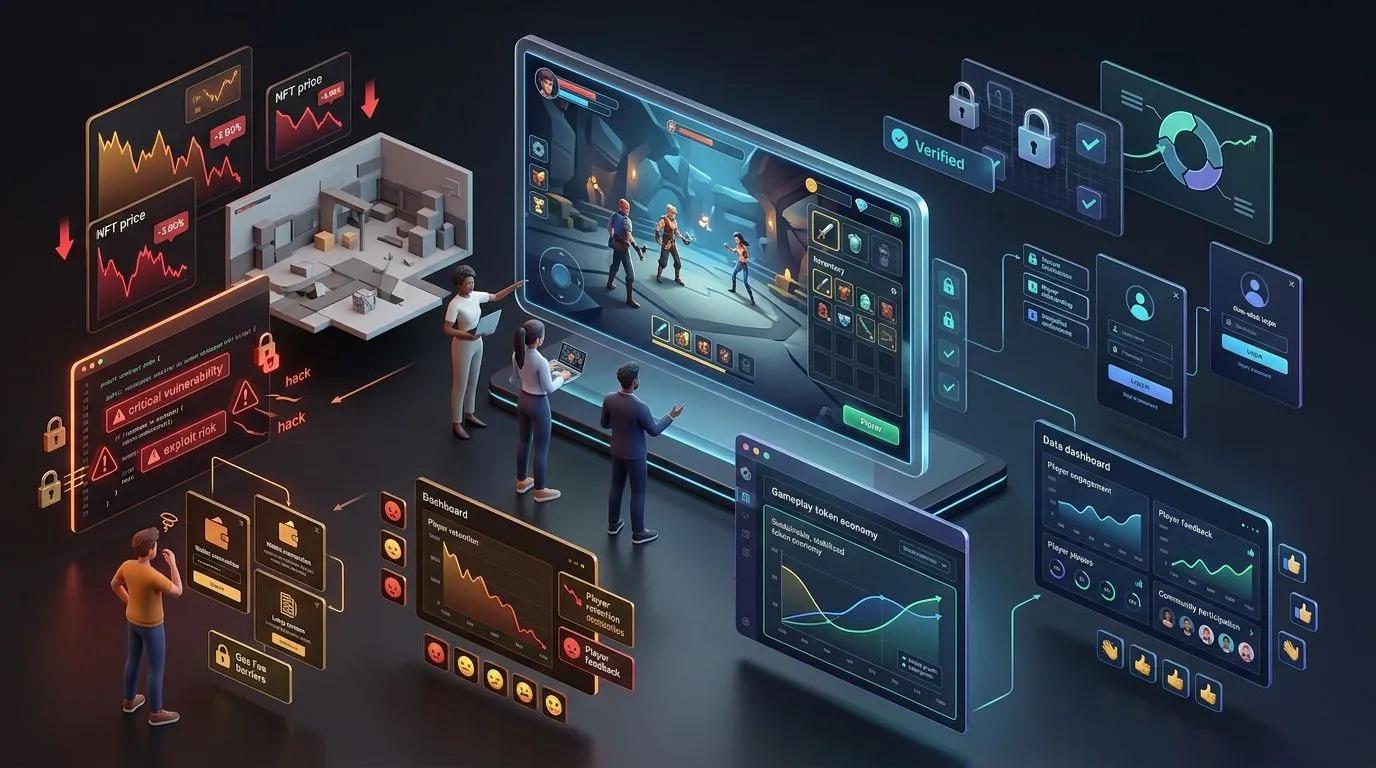
NFT Game Development Mistakes Every Startup Should Avoid
Introduction
Most NFT games never reach their second year. Not because blockchain gaming lacks potential, but because too many startups build the token economy first and the game second.
If you're a founder planning an NFT title, the data on failure rates should shape your roadmap before you write a single line of code. This article breaks down the mistakes that killed the last generation of Web3 games and what to do differently, whether you're evaluating a game development service, a game animation service, or building an internal team.
To answer the core question directly: most NFT game startups fail because they prioritize tokenomics and speculation over actual gameplay, security, and player onboarding. Fix those fundamentals first, and blockchain becomes a feature instead of a liability.
Featured Snippet: Why Do Most NFT Games Fail?
More than 90 percent of Web3 games failed after studios and investors poured up to 15 billion dollars into tokens and NFTs before building compelling games, with over 300 blockchain games shutting down as capital moved elsewhere.
The top failure causes, in order of frequency:
Unsustainable token economics that collapse under inflation
Gameplay that isn't fun on its own, with or without blockchain
Unaudited or poorly secured smart contracts
Onboarding friction that limits players to crypto natives
Weak community engagement and ignored player feedback
Mistake 1: Building the Token Economy Before the Game
Unsustainable token economics, where aggressive token emission without enough sinks inflates supply and collapses the token price, is the most common and most preventable failure in blockchain gaming.
Teams design reward systems, staking mechanics, and marketplace fees before they've proven anyone wants to play the actual game. When the token loses value, players leave, and there's no gameplay loop strong enough to hold them.
Fix: Prototype and test the core game loop first. Treat tokens as a layer added later, not the foundation.
Mistake 2: Treating Blockchain as the Product Instead of a Feature
No tokenomics system can retain players who don't enjoy the core game loop, and the link between retention and game quality is the same in blockchain gaming as in any other genre.
Players don't log in daily because of a ledger. They log in because a game is fun. Startups that lead with "earn crypto by playing" instead of "play a good game that happens to use blockchain" consistently lose their audience once speculative interest fades.
Fix: Lead marketing and product decisions with gameplay quality. Mention NFTs and ownership as a bonus, not the pitch.
Mistake 3: Skipping Smart Contract Security Audits
Roughly 41 million dollars in NFTs were stolen in a single month through phishing scams alone, underscoring how exposed poorly secured NFT systems are to attack. Unaudited or poorly designed smart contracts create security exploits that destroy community trust instantly, and a single hack can end a project that took years to build.
Fix: Budget for third-party smart contract audits before launch, not after an incident. This isn't optional infrastructure, it's the foundation of player trust.
Mistake 4: Forcing Players Through Wallets and Gas Fees Before They Play
Requiring new players to navigate wallets, gas fees, and crypto purchases before playing a single minute caps the audience to crypto natives only.
Most players will not install a wallet extension, buy tokens, and approve gas fees just to try a game. This single friction point eliminates the majority of a mainstream audience before they see any gameplay.
Fix: Let players try core gameplay without a wallet. Introduce blockchain features after they're already engaged.
Mistake 5: Ignoring Community Feedback During Development
Startups that treat their community as a marketing channel instead of a feedback source lose the early insight that could catch design problems before launch. Active NFT gaming communities catch balance issues, onboarding friction, and economy flaws faster than most internal QA processes.
Fix: Build feedback loops into your development cycle from alpha testing onward, not just at launch.
Mistake 6: Underestimating Development Timelines Against Market Cycles
Crypto markets move faster than most games can be built. Projects that spend three to five years in development often launch into a completely different market than the one they started in, with token values and player sentiment already shifted.
Fix: Build in shorter milestones with playable releases, rather than one long development cycle toward a single launch.
NFT Game Development: Common Approach vs. Sustainable Approach
Common Failed Approach | Sustainable Approach |
|---|---|
Token economy designed before gameplay | Gameplay prototyped and tested first |
Marketing leads with "earn crypto" | Marketing leads with fun and quality |
Security audits skipped or delayed | Audits built into the launch budget |
Wallet required before any gameplay | Wallet-free trial of core game loop |
Community treated as marketing only | Community feedback shapes development |
Common Mistakes to Avoid
Poor game planning centered on token mechanics instead of gameplay
Ignoring player experience in favor of speculative economics
Choosing an unaudited or rushed smart contract implementation
Skipping prototyping before committing to full production
Poor UI/UX that adds crypto complexity to every screen
Underestimating post-launch support and economy balancing
Best Practices
Prototype and test your core game loop before designing any token system
Commission a smart contract security audit before any public mint or launch
Let new players experience gameplay before requiring a wallet
Build community feedback channels early and act on what you hear
Plan token sinks alongside token rewards from day one, not after inflation becomes visible
Work with a game development service experienced in both game design and blockchain integration
Working With an Experienced Development Partner
NFT game development requires two skill sets that rarely exist in the same small team: strong game design and blockchain engineering. Startups that try to build both from scratch often lose time relearning lessons the wider industry has already paid for.
Cobweb Games, 580 California Street, San Francisco, CA 94104, phone (855) 773-1064, email [email protected], website cobwebgames.com, works with founders on custom game development, blockchain and NFT game development, game animation services, and game art and asset creation, built around sustainable gameplay first.
Frequently Asked Questions
Why do most NFT games fail? Most fail because teams build token economics before proving the core game is fun, combined with weak security and heavy onboarding friction.
Is NFT game development still worth pursuing in 2026? Yes, for teams that treat blockchain as one feature within a genuinely engaging game rather than the entire product.
How important is a smart contract audit? Critical. Unaudited contracts are one of the most common causes of catastrophic, trust-ending failures in NFT games.
Should a startup require a wallet to play? No. Requiring a wallet before gameplay limits the audience to crypto natives and blocks mainstream adoption.
What game animation services matter most for NFT games? Character and asset animation that makes NFT items feel valuable and distinct in actual gameplay, not just in a marketplace listing.
Conclusion
The NFT games that survive the next cycle will be the ones that treated blockchain as an enhancement to good game design, not a replacement for it. Startups that prioritize gameplay, security, and low-friction onboarding avoid the mistakes that took down the vast majority of their predecessors.
Planning an NFT game and want to avoid these mistakes? Contact Cobweb Games to talk through your game design, animation, and blockchain integration strategy before you build.