
2D or 3D animation
Introduction
Most L&D teams already know their training isn't sticking. Employees forget about 90% of what they learn in a training session within a month if there's no reinforcement, which means a lot of budget gets spent on content that barely survives the first few weeks.
This raises a fair question: are corporate training videos actually better than traditional classroom or document-based training, or is that just a marketing claim? The short answer is that video-based training, especially animated video, outperforms traditional methods on retention, cost, and scalability, though traditional instructor-led training still has a place for certain skills.
This article breaks down how the two approaches compare, where 2D animation services and 3D Animation services fit into a modern training strategy, and how to decide which format is right for your team.
What Counts as Traditional Training
Traditional training generally means instructor-led sessions, printed manuals, static slide decks, or long-form PDFs. It's built around a fixed schedule, a single delivery method, and one-size-fits-all content.
Instructor-led training still holds real value. It's rated by both L&D professionals and learners as the single most effective method for leadership development, largely because it allows for role-play, live coaching, and real-time feedback that a video can't replicate. But nearly 28% of training budgets still go toward instructor-led delivery costs, which makes it one of the more expensive formats to scale across a growing team.
Corporate Training Videos vs Traditional Methods
The biggest difference between the two isn't just format. It's how each one handles time, consistency, and memory.
E-learning and video-based training have been shown to boost retention rates by 25 to 60% compared to traditional instructor-led training. E-learning also requires 40 to 60% less time to complete than a traditional classroom session covering the same material, which matters when employees have limited hours available for learning each week.
Preference plays a role too. 83% of employees say they'd rather watch a video than read text-based instructional material. That preference translates directly into completion rates and engagement, two things traditional printed training struggles with.
Featured Snippet: Key Differences at a Glance
Factor | Corporate Training Videos | Traditional Training Retention |
25–60% higher than traditional methods | Baseline, drops sharply without reinforcement Time to complete | 40–60% less time |
Longer, fixed-schedule sessions Scalability | Easy to distribute across locations | Limited by trainer availability Consistency |
Same message every time | Varies by instructor Cost per employee | Lower at scale |
Higher, especially for large teams Best for | Onboarding, compliance, process training | Leadership development, live coaching, role-play
Why Animated Training Videos Perform Better
Not all training video works the same way, and format matters. Animated video in particular tends to outperform filmed or screen-recorded training for a few reasons.
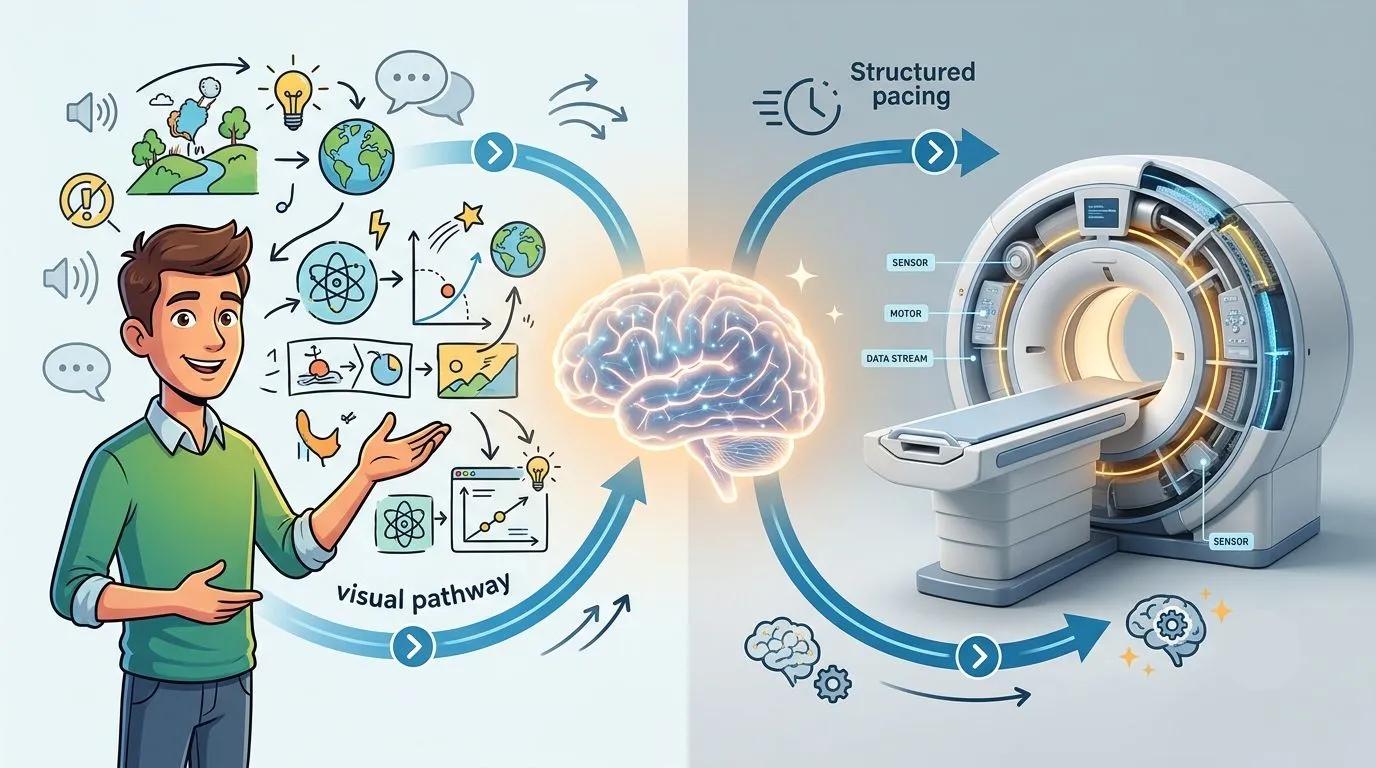
Animation removes real-world limitations. A 3D animated walkthrough can show the inside of a piece of machinery or a medical process that a camera physically can't capture. Animation controls pacing. A well-structured animated video moves at the exact speed the content requires, without dead air or filming mistakes. Animation stays current. Updating an animated explainer when a policy changes is far cheaper than reshooting live-action footage or re-scheduling a room full of employees. Animation performs consistently. 90% of L&D professionals report that video content significantly improves learner engagement and knowledge retention in corporate training programs, and animated formats tend to sit at the higher end of that engagement curve because they're purpose-built rather than filmed on the fly.
This is where the choice between 2D animation and 3D animation becomes practical rather than stylistic:
2D animation services suit process training, compliance walkthroughs, and software onboarding, where the goal is explaining a concept clearly and updating it often. 3D Animation services suit product training, equipment operation, and healthcare or technical training, where spatial detail and realism directly affect comprehension.
When Traditional Training Still Wins
Video isn't a replacement for everything. One analysis found that instructor-led sessions and workshops achieved the same learning outcomes in 25% less time than self-paced study, largely because of the guidance and hands-on coaching built into live instruction.
Skills that require real-time feedback, negotiation practice, or physical technique, like sales role-play or safety equipment handling, still benefit from a live instructor watching and correcting in the moment. The strongest training strategies typically blend both: animated video for scalable knowledge transfer, and instructor-led sessions for coaching and behavioral practice.
Best Practices for Switching to Video Training
Start with your highest-volume training first, such as onboarding or compliance, where the retention gap has the biggest cost impact. Keep individual modules short. Longer sessions hurt completion rates far more than shorter, focused ones. Host training on a private LMS rather than public video platforms, since many corporate firewalls block external hosting. Pair video training with a short reinforcement activity, like a quiz or scenario, to counter the forgetting curve. Choose 2D or 3D animation based on the subject matter, not budget alone. The wrong format for the content will hurt retention no matter how polished it looks.
Common Mistakes Companies Make
Replacing all instructor-led training with video, even for skills that require live coaching Producing long, unstructured videos that mirror a slide deck instead of a purpose-built script Skipping reinforcement, assuming a single video viewing is enough Using generic stock animation instead of content built around the company's actual processes Failing to update training videos when policies or products change
Frequently Asked Questions
Are corporate training videos more effective than traditional classroom training? For knowledge transfer, process training, and compliance, yes. Video-based training generally shows higher retention and lower time-to-completion. For coaching and behavioral skills, instructor-led training still performs better.
Is 2D or 3D animation better for corporate training videos? 2D animation is typically the better choice for process, compliance, and software training because it's faster and cheaper to update. 3D animation is worth it when the training involves physical equipment, spatial reasoning, or technical detail that 2D can't show clearly.
How much does switching to video training actually save? Time savings are significant. E-learning generally requires 40 to 60% less time than a traditional classroom to cover the same material, which reduces both training hours and instructor costs.
Should companies fully eliminate instructor-led training? No. The strongest programs combine both. Use video for scalable, repeatable training, and reserve instructor-led sessions for coaching, leadership development, and skills that need live feedback.
Conclusion
Corporate training videos, particularly animated ones, consistently outperform traditional training on retention, time, and scalability. But traditional instructor-led training still holds its ground for coaching, leadership development, and hands-on skills. The most effective L&D strategies aren't choosing one over the other. They're using each format for what it does best, and building animated content, whether 2D animation or 3D animation, around the specific type of knowledge employees actually need to retain.
Animated Explainers, located at 100 West Road, Suite 300 #351, Towson, MD 21204, USA, works with corporate training teams across the United States, Canada, the UK, and Australia to build training video content designed around measurable retention, not just visual polish. Explore examples through the portfolio, or look into corporate training videos and SaaS explainer videos to see which approach fits your team.